Howdy, y’all!
In a previous post titled “5 Peachy Keen Classroom Management Strategies for an Awesome 2025-2026 School Year!”, I touched on the idea of classroom jobs and how they function to keep a room running smooth. Today, I want to take a few minutes to expand on that a bit further, because establishing an economy of responsibility is a system that fully supports the well-being and flow of my class.
Now, let’s clear up one thing right off the bat because I get this question a lot: I do not ask for donations for my classroom. But honey, people are just good-natured; when they see this system running, they’ll occasionally gift me items to stock up what I call my Treasure Chest. It’s not a literal wooden chest—it’s a sturdy, three-shelf cabinet packed with goodness.
Here is how the daily economy works: I buy standard roll raffle tickets, and yes, I sign the back of every single one to keep things honest, recycling them as we go. At the start of the year, every kid gets a Ziploc bag. I tell them, “These tickets operate just like cash. If you lose a ticket, thou shall not have a replacement.” However, bless their hearts, if they accidentally leave them in their pockets and they go through the wash, if they bring me that poor, crumbly pile of laundered tickets, I will absolutely replace them.
There are other teachers in my building who also use a ticket system, but theirs are slightly different, which is why I always make sure to sign the back of mine so there are no real forgeries of any kind. I’ve tried cash dollars or keeping a pencil system in the past, but standard raffle tickets are just easy and work out beautifully.
There are two main ways to earn a ticket in my room:
- Classroom Engagement: Answering questions with text-based affection and evidence to promote genuine discourse. You can’t just shout out random things to collect cash; it has to add to the conversation.
- Classroom Jobs: Stepping up to be an official “employee” of our room.
The Weekly Friday Shop & The Pass System
Every single Friday is “Shopping Day.” Students can spend their hard-earned tickets on food items or save up for my personal favorite: The Pass System. The very first time we shop during the semester, I only let them purchase passes to build up that reward mentality. These aren’t just little scraps of paper; they are tools for students to manage their own academic needs. They can buy homework passes, quiz passes, 50% off passes, adjusted essay prompts, abbreviated mini-projects, or an extra bathroom pass for the month. They can even buy a “friend pass” to sit next to a buddy for the day, or a pass to spend a chunk of class doing study hall down in the library once their required work is finished.
When students use these passes, they either hand them to me to inform me of the change for the day, or they attach them directly to an assignment so I know how to adjust the rubric or grade moving forward.
When it comes to the food treats, I check for food allergies ahead of time. We stock up on AirHeads, Blow Pops, bags of chips, and fruit snacks. They even tell me what specific bulk snacks to buy from Costco! I also include cases of water with little sugar-free individual drink packets, Capri Suns, and a Cosmic Brownie or two.
Now, we all know teachers spend way too much of their own personal grocery money on their classrooms, and it’s a choice we make that a lot of folks don’t understand. The truth is, when you walk into a bare classroom upfront, you basically get tables, chairs, lights, and if you are lucky, some textbooks and paper. If your principal is feeling exceptionally generous at the beginning of the year, you might get a welcome bag with one bottle of hand sanitizer and one box of tissue. The rest comes out of our pockets. I budget for this every single year and keep a running list of my receipts. Don’t forget, as a teacher you do get that federal tax write-off on your income taxes! It may be a small portion of what we actually put into our rooms, but it makes a difference on your tax breaks. Depending on how you do your taxes, you can talk to an accountant about state and local policies for purchasing classroom supplies.
A quick rule of thumb on the ticket currency: Once a student earns a ticket, it is theirs. You cannot take a ticket away as a disciplinary tool. Detractions defeat the whole purpose of a positive behavior and community-building process. If the class is having an exceptionally awful week, I simply reserve the right to close the shop on Friday until we get our acts right.
Meet the Employees: 2-Week Roles That Rock
No matter if your students are tiny tots or almost grown-up high schoolers, assigning classroom jobs around Day 5 or Day 8 of class is an absolute game-changer. This isn’t just about getting a little help with classroom management; it’s about making your students feel invested, responsible, and like they truly own a piece of the classroom. I like to call my job holders “employees” because they are truly invested in the success of our shared space.
I don’t assign jobs during the first two weeks of school. I do everything myself then because the kids need to learn my protocols and procedures first. But come Week Two, I introduce the job board and explain what the rewards look like in our cabinet.
To get hired, students fill out a simple half-page job application I found online. It’s first-come, first-served, and requires a quick two-minute interview to determine if they are appropriate for the position. They are hired and “employed” for exactly two weeks at a time. Any longer than that, and it tends to look like favoritism. Plus, I don’t let them apply for the same job twice in a semester so we cycle through different students. Even if you only have a handful of jobs, it ensures everyone gets a turn to lead.
Every day at the end of the block, I keep a quick check-plus-minus log next to their names. If they do their job well, they get paid 8 tickets a week (16 total per session). And remember, you ain’t getting paid if you aren’t there! Their final pink slip and “thank you for your service” at the end of the two weeks is an assignment pass or classroom pass of their choice.
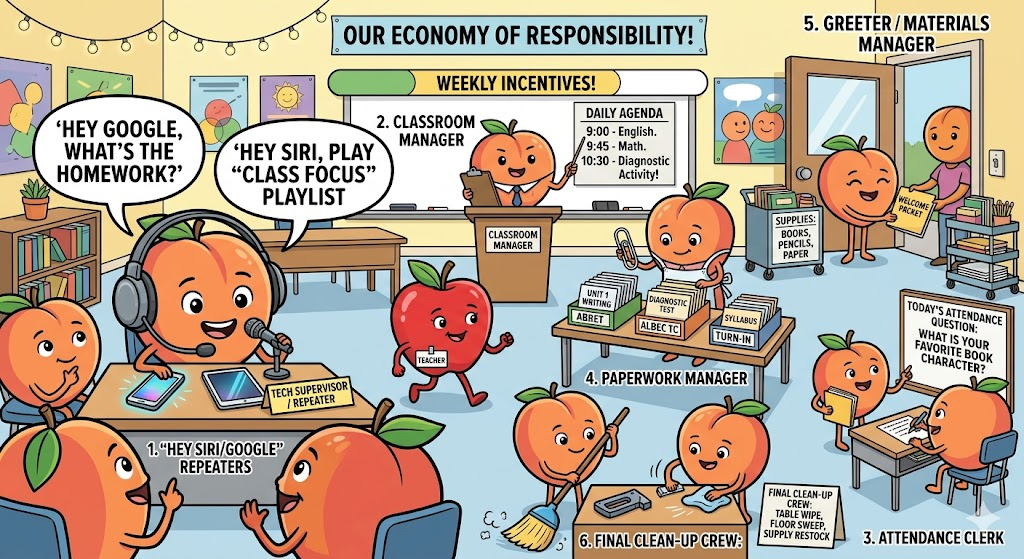
Here are the employee roles that have worked wonders for me:
- The Class Manager: The big boss role. This student keeps an eye on the daily agenda, leads our Monday morning meetings where we debrief deadlines, and helps us stay on track. They make sure all other employees are doing their jobs, and they are the one who manages substitutions or handles welcoming a peer if someone is absent.
- Attendance Clerk: They handle the daily attendance folder. If a student walks in late, they check in with the clerk, who then tells me to update the electronic system. Best of all, they help call roll by coming up with a fun, open-ended question for everyone to answer every single day. (I’ll link my master list of attendance questions below if you want to use them!)
- Paperwork Manager: A true lifesaver. This student handles passing out documents and collecting assignments, sorting them alphabetically by last name with a paperclip before putting them in the turn-in box. Aside from highly personal items like the In a Million Words or Less parent letters, I rarely touch loose paper during class.
- Greeter & Materials Manager: Welcomes folks at the door with a friendly smile, shares daily reminders, and takes care of all our school supplies to ensure our cabinets are always stocked.
- Technology Supervisor: Our tech guru. They manage the power strips, help troubleshoot digital links, and gently remind peers about cell phone etiquette.
- The “Repeater” (My Favorite!): This job belongs to a student whose sole responsibility is to clarify or repeat instructions when someone asks what we are doing. It keeps me from sounding like a broken record and beautifully channels the energy of a student who might otherwise get distracted.
- Final Clean-Up Crew: They make sure our space is just as sparkling clean as when we started. They wipe tables, empty the hole punch, restock staples, sweep up if it’s the last block of the day, and turn off my lights.
Soft Skills and Real-World Application
These jobs aren’t about policing. I never let students write hallway passes or handle discipline—that is strictly my job as the teacher. These roles exist to teach responsibility, leadership, and necessary soft skills.
It also teaches empathy. For example, if my Class Manager notices a peer is fast asleep, I might have them let that student snooze for exactly eight minutes and then gently wake them up. The truth is, people are people and students are students—sometimes tired is just tired. If they had an athletic game or practice until 10:00 PM, went home, and did homework until midnight for my class and someone else’s, they are just plain exhausted. They need a community that cares about their well-being.
To top it all off, we crown an Employee of the Month! They get a certificate, a proud phone call home to their folks, and a full-size, king-size candy bar or a donut—because why not? It’s a donut.
When students have a defined role and a little incentive, they step up. It is truly a beautiful thing to watch! High schoolers are no matter what still kids, and this system gives them the opportunity to develop real-world skills while keeping the classroom flowing beautifully. They treat each other differently, they learn each other’s names, and they take pride in the environment. I’ve used this in both middle and high school settings, and it completely shifts the narrative from a dictatorship to a community.
I’ll be doing a whole follow-up post on my positive behavior plan later on and why it works so well, I promise. For now, give it a thought for this coming term and see what happens when you let them help run the show.
Until next time, y’all take care.


Leave a Reply